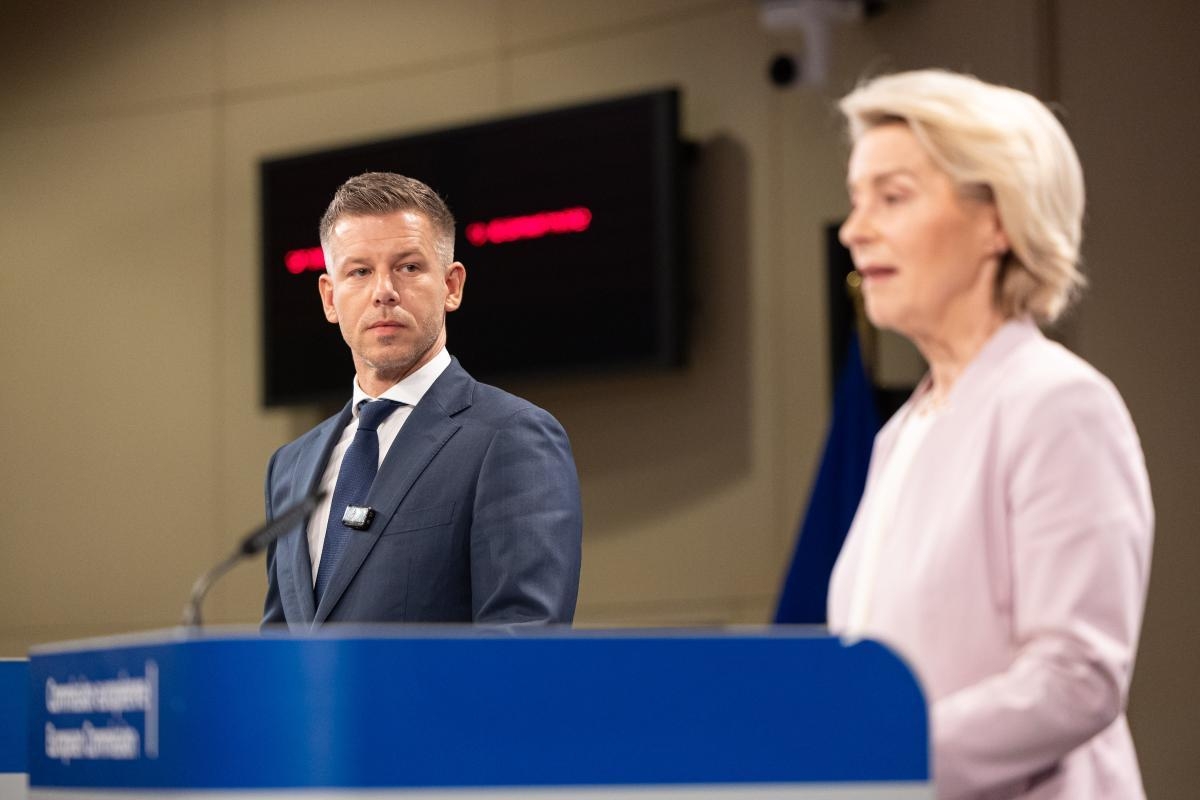
Leaders of the Group of Seven wrapped up their annual summit in Évian-les-Bains, France, on June 17th in what was, by recent standards, a remarkably cooperative mood. Over three days, the club of wealthy countries – the United States, the United Kingdom, Canada, France, Germany, Italy and Japan, plus the European Commission and the European Council – managed to agree on nine declarations covering everything from cancer research to Ebola funding, drug trafficking to migrant smuggling. The American president’s name was written all over the final language – but that, as it turns out, was rather the point.
The atmosphere was shaped by events outside the meeting room. The U.S.-Iran memorandum of understanding – an “historic opportunity”, as per the summit conclusions – made everyone confident that the Strait of Hormuz would fully reopen soon, easing fears about energy supply disruptions that had been rattling commodity markets. G7 leaders duly praised President Trump’s “strong leadership” on the matter. France and the UK were tasked with a multinational naval initiative to ensure merchant shipping could resume unimpeded.
With that crisis defused, attention turned to what comes next. As President Trump was keen to pivot to the next big issue, Ukraine remained high on the agenda: leaders reaffirmed support for Kyiv’s sovereignty and agreed to increase deliveries of air-defence systems and long-range capabilities, as well as tightening sanctions on Russia’s oil and gas sectors.
Finding a new normal
Beyond the geopolitical theatre, some sort of transatlantic recalibration – however small – seems to be underway. The EU-U.S. trade deal, long stalled, is close to being ratified. The European Parliament has approved the final compromise, and the Council is expected to follow next week. Still, that does not resolve every tension: the Trump administration is set to launch a Section 301 investigation on unfair trade practices targeting German healthcare reforms, and pharmaceutical pricing remains a live flashpoint across EU Member States.
There was a special place for artificial intelligence, which left both Europeans and Americans hopeful. In a behind-closed-doors working lunch with chief executives from all the major AI firms, Anthropic’s advanced models became a flashpoint after Washington restricted foreign access last week on national security grounds. The move alarmed European governments already anxious about digital dependence on American providers, and accelerated calls for a “trusted partners” scheme that would give close allies privileged access to frontier US models. Macron called the unilateral shutdown a clarification of what is at stake: one government could simply “turn off the switch.”
At a working lunch that seated Trump between OpenAI’s Sam Altman and Google DeepMind’s Demis Hassabis, with Anthropic’s Dario Amodei beside Macron, the industry chiefs delivered a unified message: democratic countries should collaborate on AI governance rather than fragment. “Do not cede your responsibilities to AI labs like mine,” Altman told the assembled leaders. Amodei warned against the temptation to “splinter” regulatory approaches. All three, of course, have strong commercial incentives for saying so.
The G7 also pledged closer coordination on critical minerals, setting a target to reduce dependence on a single external supplier for rare earths and permanent magnets to below 60% by 2030, backed by 64 billion euros in announced investments since early 2026.
The summit was not a revolutionary transformation. But for a forum that has spent recent years struggling to agree on anything, Évian offered something rarer: a shared agenda, and a host country willing to hold it together.