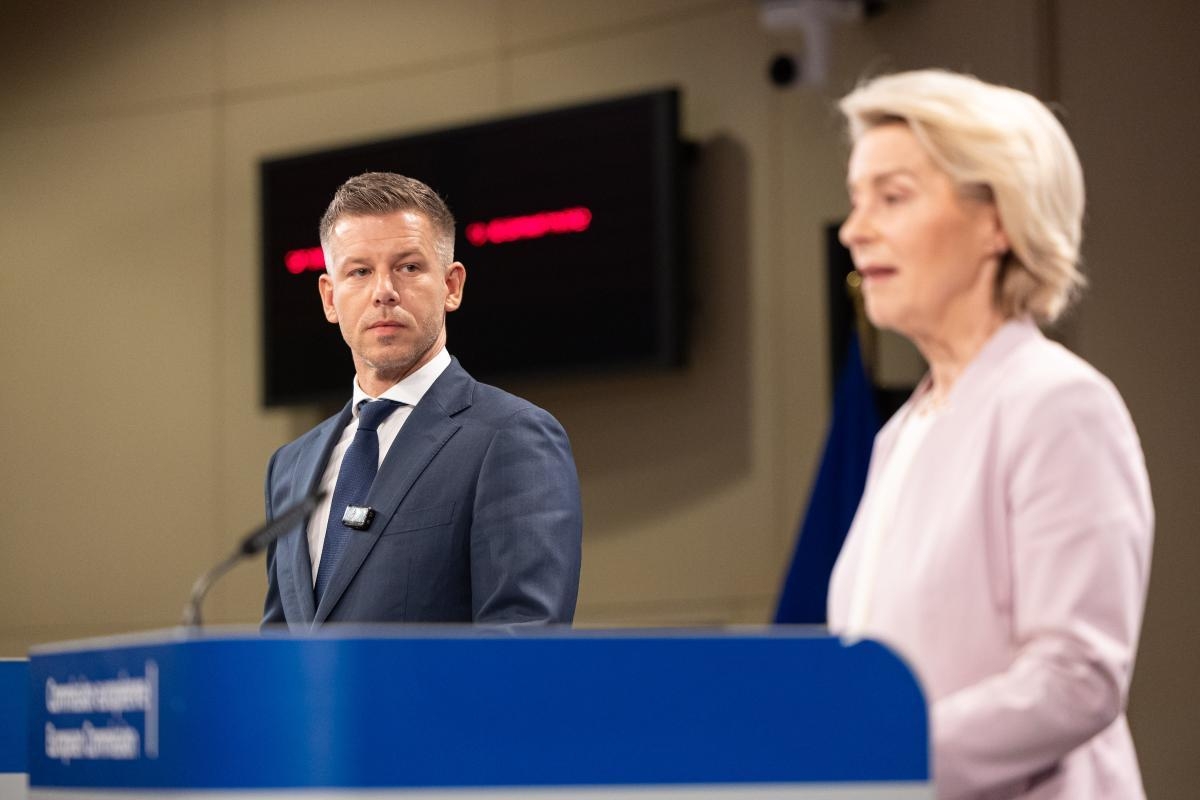
EU leaders gathered at the European Council on Thursday (19 June) to address a question that has become increasingly difficult to ignore: how should Europe respond to growing economic competition from China while maintaining one of its most important trading relationships? Despite months of tougher rhetoric and concerns from European industries facing pressure from low-cost Chinese imports, leaders opted for dialogue over immediate confrontation, while also asking the European Commission to strengthen the bloc’s trade defence tools.
The EU now runs a goods trade deficit with China worth roughly €1 billion every single day. European exports to China are falling, while Chinese imports into Europe continue to rise. The products flooding European markets are no longer just cheap consumer goods, they include sophisticated, high-end manufactured items like electric vehicles.
The core problem is straightforward: China has become highly competitive in manufacturing a wide range of products, including many high-value goods that have traditionally been European strengths. These products are being sold in European markets at prices that many domestic manufacturers struggle to match. In part, this is because Chinese companies benefit from substantial government subsidies that can distort competition. As a result, European businesses are losing market share and, in some cases, being forced to scale back operations or close altogether.
Several EU member states, including France, Italy, and the Netherlands, had arrived at the summit calling for robust new measures: higher import taxes, restrictions on certain goods, and rules that would force companies to find alternative suppliers for critical industrial materials. China’s recent decision to restrict exports of critical minerals has added further urgency to the debate.
Dialogue first, new tools to follow
The outcome was a dual mandate for Commission President von der Leyen: keep talking to Beijing while preparing stronger defences. Leaders instructed her to pursue “constructive dialogue” with the EU’s main economic partners (a formula diplomatically worded to avoid naming China directly) while simultaneously assessing whether existing trade protection tools can be used more effectively and eventually developing new ones if needed.
A meeting between Chinese Commerce Minister Wang Wentao and the EU’s trade chief, Maroš Šefčovič, is scheduled for the end of June in Brussels, signalling that diplomatic channels remain very much open.
What comes next
Thursday’s summit moved the dial, but not dramatically. The EU has been circling this debate for months. However, there is now a clearer consensus among member states that Europe must reduce its dependence on Chinese exports and strengthen its capacity to respond when China uses trade as a lever (as it did when it imposed taxes on European food and wine in retaliation for EU tariffs on Chinese electric vehicles). The Commission has been given a mandate to act; the question is how swiftly it will move, and whether the political will across 27 governments will hold when Beijing pushes back.