On Thursday (24 July), the Trump administration finalised sweeping new tariffs on dozens of countries, with duties of 10 to 12.5 per cent taking effect from Friday against trading partners including the EU. The move comes after the US Supreme Court struck down President Donald Trump’s earlier “Liberation Day” tariffs in February, forcing the administration to find a new legal route to keep duties in place. This time, the justification is different: a five-month investigation into whether trading partners are doing enough to root out forced labour from their supply chains.
A new legal basis, a familiar outcome
When the Supreme Court ruled against Trump’s original tariffs, it found that the law he had used (the International Emergency Economic Powers Act) did not actually authorise them. In response, the administration imposed a temporary global tariff of 10 per cent under a different law, Section 122 of the Trade Act of 1974. That measure, however, can only last 150 days, and its expiry on Friday left the White House needing a fresh legal foundation.
It found one in Section 301 of the same Act, using a forced labour investigation as the basis for the new duties. Seventeen partners, including the EU, the UK, Canada, Indonesia and Mexico, now face a 10 per cent tariff, while 43 others (among them China, Japan, South Korea and Australia) face 12.5 per cent.
Notably, many of these new rates are still lower than the “reciprocal” tariffs Trump imposed last year before the Supreme Court intervened. Further tariffs may yet follow: a separate, ongoing investigation into manufacturing overcapacity could bring higher duties on the EU, China, Japan, South Korea and others, while a probe into Germany’s pharmaceutical pricing practices is also underway, with similar investigations into France reportedly “waiting in the wings” should drug pricing talks break down.
What it means for the EU
For Brussels, the forced labour justification is awkward. The EU already has its own regulation banning goods made with forced labour, and many trade lawyers consider it broader in scope than the equivalent US legislation. However, it does not come into force until December 2027, giving Washington a convenient opening for criticism in the meantime. The Trump administration has also lobbied against a separate EU law requiring companies to carry out human rights due diligence across their supply chains, adding to the sense that the forced labour rationale is being used somewhat selectively.
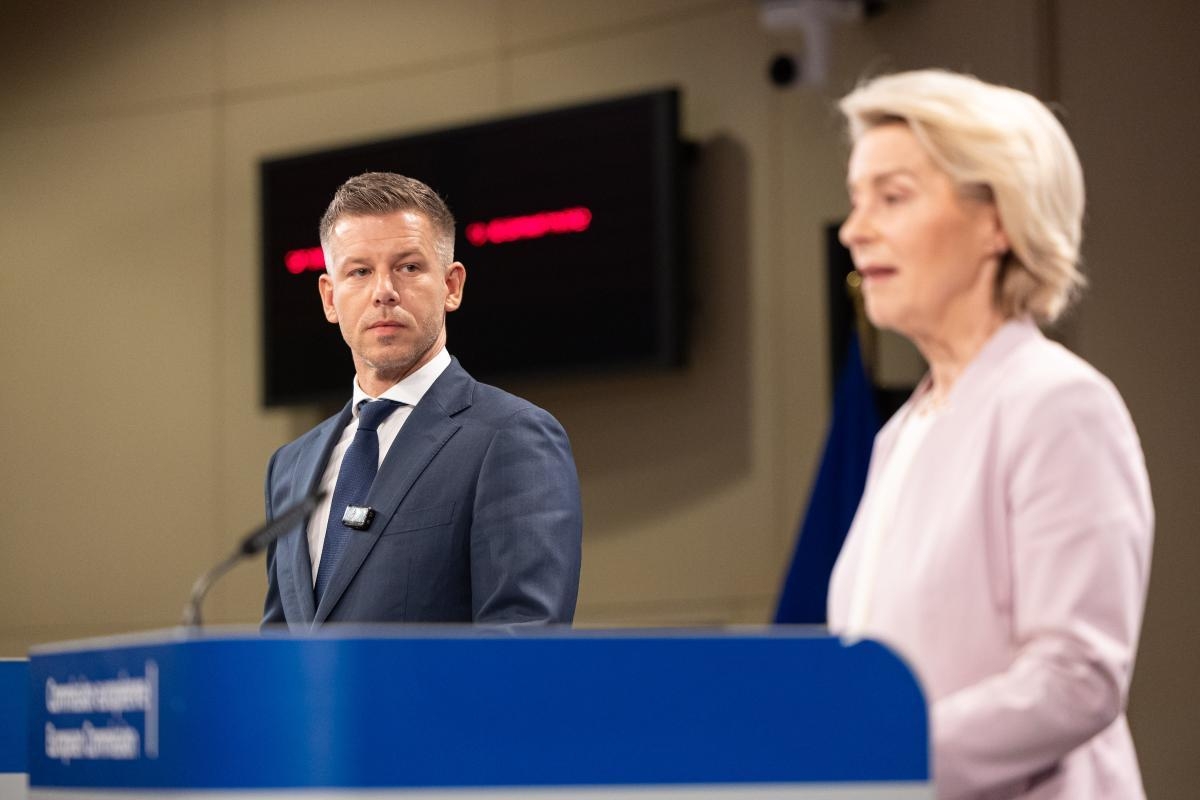
Despite this, the European Commission appears willing to accept the new tariffs largely without objection. Its priority is stability, and above all, holding the US to the Turnberry agreement, which caps tariffs on EU goods at 15 per cent. With the new 10 per cent rate sitting comfortably within that ceiling, Brussels has little incentive to escalate tensions. The EU’s approach reflects a broader calculation: that avoiding a damaging trade confrontation matters more than contesting the legal or moral basis of Washington’s action.
The bigger picture
The new tariffs show how the Trump administration has adapted to legal setbacks rather than abandoning its trade agenda, finding a fresh justification to reconstruct duties that courts had already dismantled. For the EU, the immediate impact is manageable. Still, the episode underlines how exposed European exporters remain to shifting US trade policy, and how limited Brussels’ appetite is for pushing back. With further investigations into manufacturing overcapacity and pharmaceutical pricing still under way, this is unlikely to be the last word.