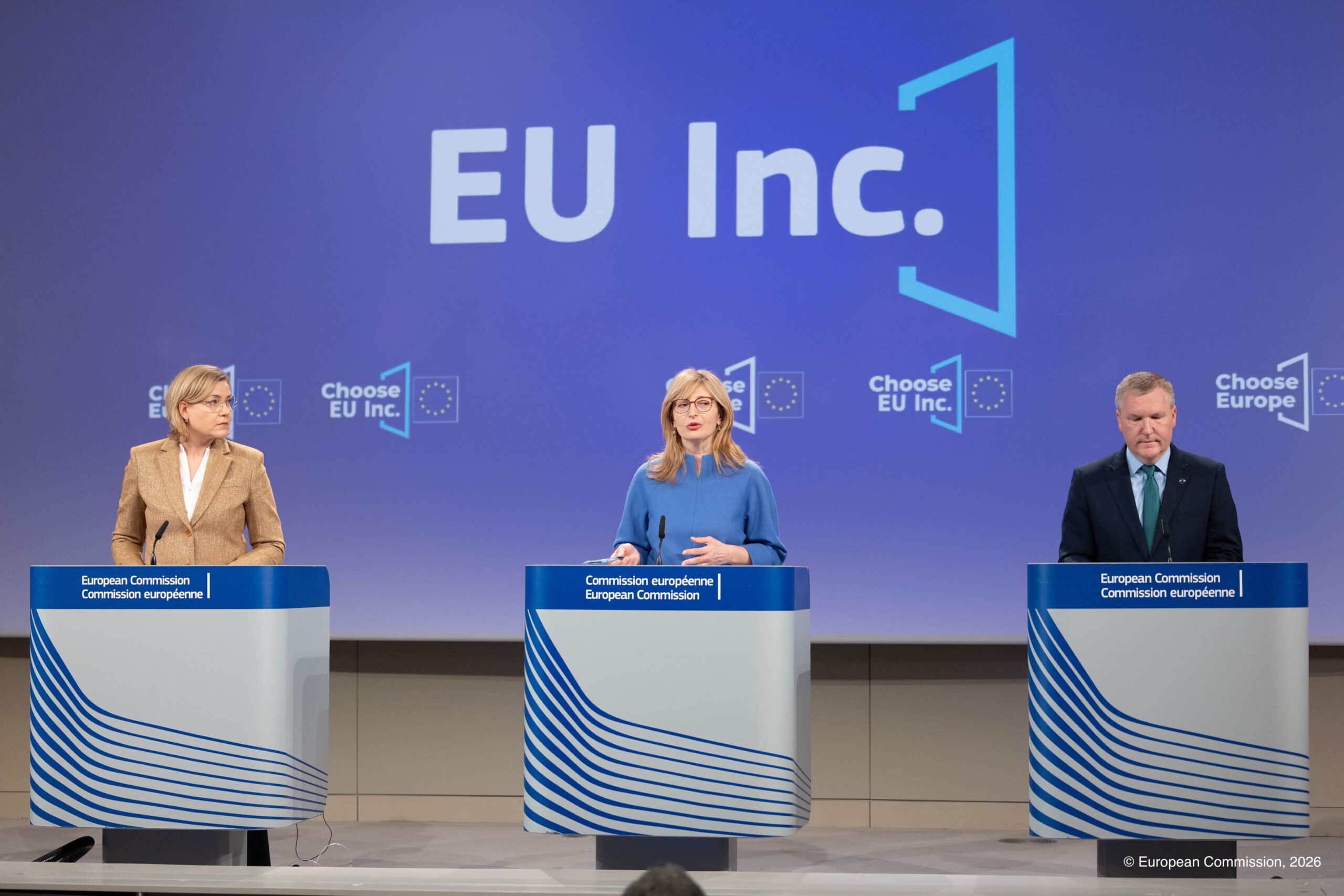
With much of Brussels still asleep after their Christmas dinners, we look into the Commission’s simplification and deregulation agenda. How did we leave the last year, and what can we expect in 2026? And – crucially – what will become of the much‑anticipated “28th regime”, Commissioner McGrath’s flagship attempt at unifying EU company law into a single, optional legal regime that sits alongside the 27 national systems?
Brussels is pressing ahead with a voluntary, pan‑EU company regime that would sit alongside national law. Commissioner Michael McGrath told the Financial Times it would allow online incorporation within 48 hours, low or no minimum capital, and harmonised rules on governance, insolvency, taxation, and share issuance. He prefers a regulation to ensure uniform application across the EU, avoiding 27 different national versions.
While start-ups welcome the simplification, trade unions and some member states worry it could undermine workers’ rights or encourage legal shopping. McGrath insists protections will be maintained, and the regime will be open to as many companies as possible. The proposal is expected in late March 2026.
Scrapping rules
The Commission’s omnibus approach has become the backbone of its simplification drive, bundling amendments across related legislation to cut red tape for businesses and public authorities. The goal is to reduce administrative burdens by at least 25 per cent for all companies and 35 per cent for SMEs by 2030, saving around €37.5 billion.
In 2025, Brussels rolled out packages covering sustainability, investment, agriculture, defence, chemicals, automotive, digital and AI, environmental compliance, and food rules. Importantly, the first two omnibus packages – easing corporate sustainability reporting and due diligence, and streamlining InvestEU, the EU’s investment fund – were agreed upon last year. The environmental omnibus simplified emissions, reporting, assessments and geospatial data, cutting around €1 billion in annual costs.
Eight packages are now on the books, with more expected in early 2026. The taxation omnibus and energy product omnibus are set for Q2, while a citizens omnibus is due in Q4, reflecting a shift toward cross-cutting fixes rather than piecemeal tweaks.
New laws with simpler dimensions
Alongside omnibus bundles, the 2026 legislative pipeline features several high‑profile proposals where simplification is an explicit design feature or a stated objective. The European Innovation Act, expected in Q1 2026, aims to streamline the innovation ecosystem by cutting procedural friction in developing and scaling new technologies. The Public Procurement Act (Q2 2026) seeks to make public tendering quicker and more transparent across the EU.
A cluster of acts later in the year – the Advanced Materials Act (Q4 2026), European Biotech Act II with a food‑tech focus (Q3 2026), and the Circular Economy Act (Q3 2026) – are designed to simplify sectoral rules while maintaining high environmental and safety standards. Another major package, the European Product Act suite, scheduled for Q3 2026, aims at cleaning up and harmonising product safety, market surveillance and standardisation rules to make compliance more coherent and less burdensome for manufacturers and traders. Together, these legislative clusters all carry threads of simplification and better regulation, signalling that Brussels intends to bake red‑tape reduction into the very fabric of future EU law.
Ireland’s moment
Much of this legislative momentum will fall under the Irish Council presidency, which means Dublin will play a central role in shepherding these proposals through introduction, interinstitutional negotiations, and potential agreement. Ireland’s leadership will shape the pace and direction of discussions, giving it a prominent hand in setting the EU’s simplification and deregulation agenda for 2026.