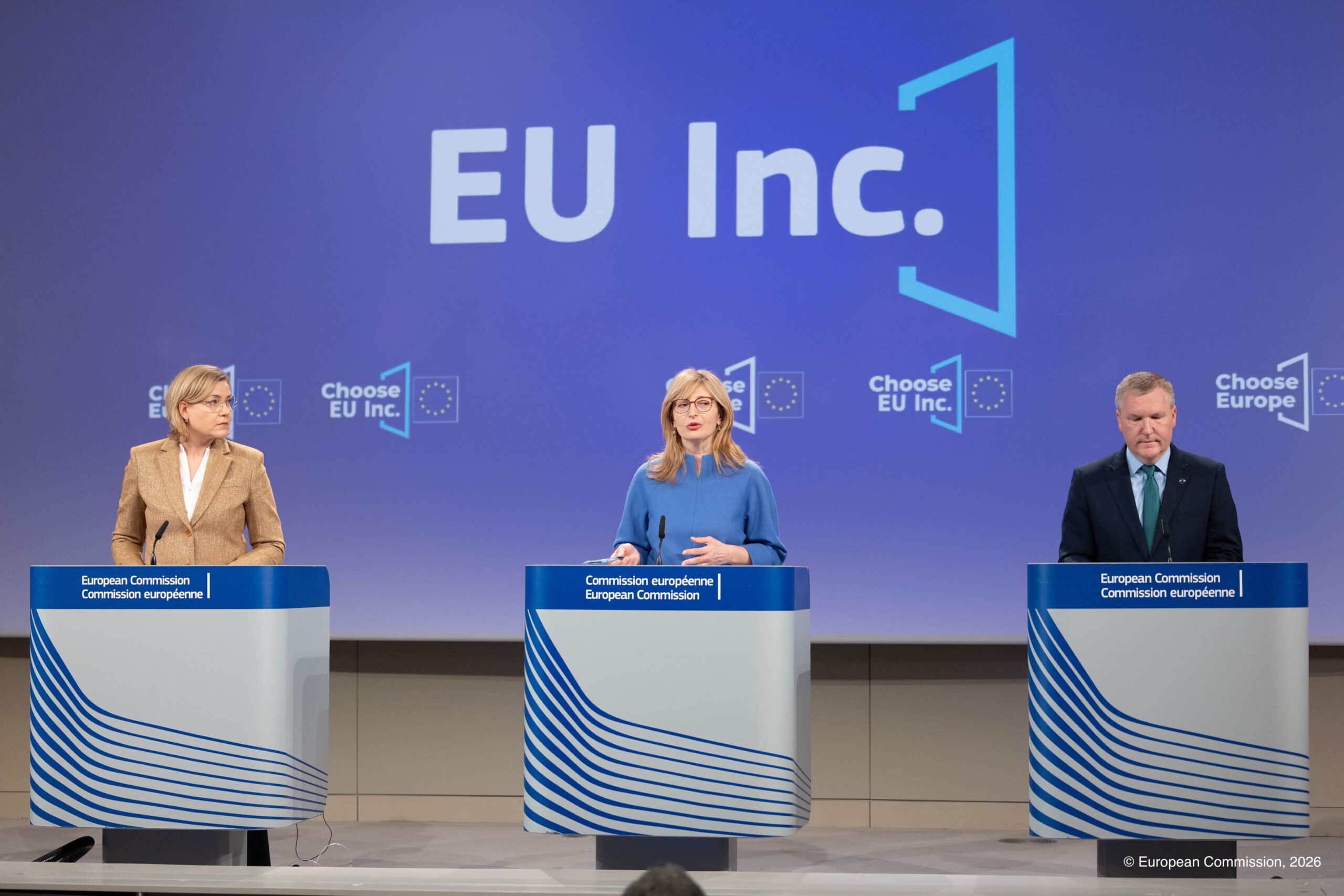
On Thursday (4 December), the European Commission launched a comprehensive package of measures seeking to fully integrate the European Union’s financial markets. This package, a core part of the Savings and Investments Union strategy (SIU), is designed to remove existing national barriers, unlock scale, and enhance competitiveness.
Why does the Commission want to integrate financial markets?
Despite having the largest single market for goods and services, the EU’s financial sector remains surprisingly fragmented, lagging behind global competitors like the U.S. Currently, financial institutions face different rules and practices in each Member State, making it costly and complicated to operate across borders. This fragmentation holds back the entire EU economy.
To put it in perspective, in 2024, the total market value of all companies listed on EU stock exchanges was only 73% of the EU’s Gross Domestic Product (GDP), a stark contrast to the massive 270% seen in the US. This lack of scale translates to higher costs for companies seeking investment and fewer efficient options for ordinary citizens looking to invest their savings. The Commission’s package is designed to address this by making the single market for financial services “greater than the sum of its national parts.” By simplifying access to capital markets, reducing fragmentation, and leveraging economies of scale.
The measures
The reforms focus on three major areas: centralising supervision, removing integration obstacles and fostering innovation.
1. Centralising supervision
The most politically significant element is the overhaul of the supervisory landscape. Currently, supervision is often fragmented among national watchdogs, leading to inconsistencies. The package proposes to:
- Upgrade ESMA’s role: The European Securities and Markets Authority (ESMA), the EU’s securities regulator, will see its direct supervisory competences significantly expanded. It will become the single watchdog for the bloc’s largest cross-border financial market infrastructures.
- New Direct Supervision: This means ESMA will directly supervise key market players, including certain major trading venues, Central Counterparties, and all Crypto-Asset Service Providers (CASPs)
2. Removing Integration Obstacles
The package introduces significant measures to make cross-border trading, settlement, and asset management seamless. This includes:
- Pan-European Market Operator (PEMO) Status: This new status will allow operators of trading venues, such as stock exchanges, to streamline their corporate structures and licenses into a single entity or a single licence format. This drastically simplifies their ability to operate across the entire EU, eliminating the need for separate national setups.
- Simplified Fund Distribution: Rules for the cross-border distribution of investment funds are being streamlined to make it easier for funds to be sold to investors throughout the Union.
To ensure clarity and consistency, the Commission will also convert several existing regulatory directives (which allow for different national implementations) into regulations (which are directly applicable across the EU). This reduction of national differences would create a truly unified rulebook.
3. Facilitating Innovation and Technology
The package also updates the regulatory framework to embrace innovation, particularly in relation to Distributed Ledger Technology (DLT). The proposals will amend the DLT Pilot Regulation (DLTPR) to relax limits and increase flexibility, providing the legal certainty needed for these new technologies to be adopted safely and widely within the financial sector.
Next steps
The proposals will now move on to be negotiated and approved by the European Parliament and the Council. The Commission is committed to collaborating with all stakeholders to ensure the entire package, which is designed to work as a unified whole, is implemented swiftly and effectively, transforming today’s fragmented landscape into a global financial powerhouse.
As Commissioner for Financial Services, Maria Luís Albuquerque outlined: “By building a real Single Financial Market, we will give people better opportunities to grow their wealth, and we will unlock stronger financing for Europe’s priorities. Market integration is not a technical exercise — it is a political imperative for Europe’s prosperity and global relevance.”