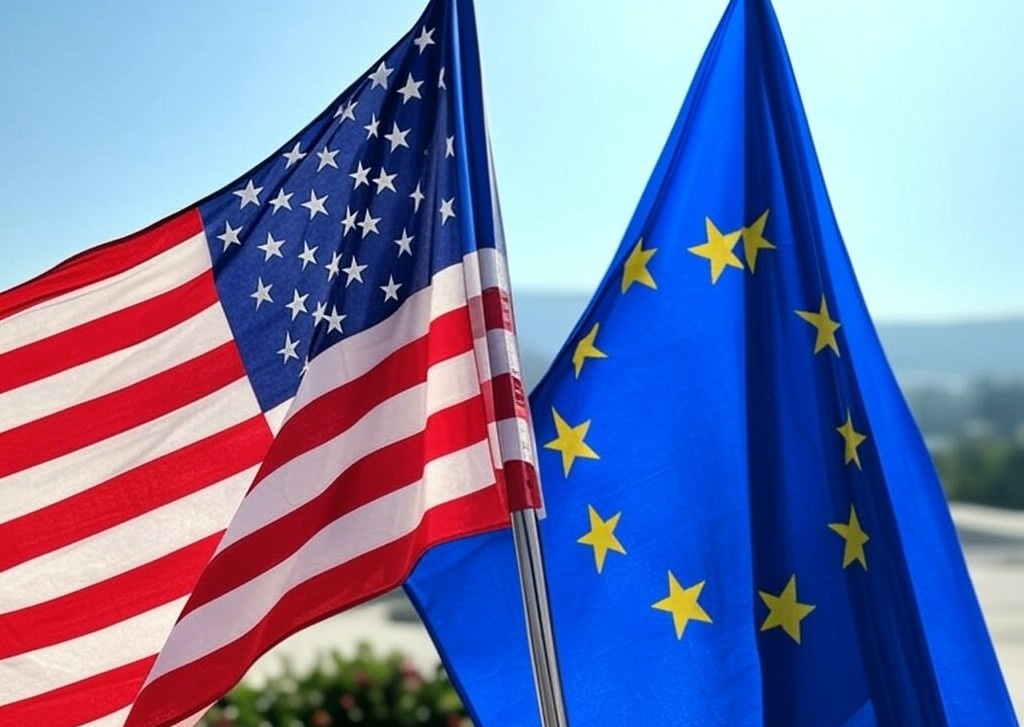
Despite threats from all sides, EU co-legislators failed to reach a compromise during Wednesday night’s (6 May) negotiations on the legislation implementing the Turnberry trade deal, the handshake agreement struck at President Donald Trump’s Scottish golf resort in July 2025.
Talks lasted nearly six hours before breaking up without agreement on any of the main sticking points. EU Trade Commissioner Maroš Šefčovič, who urged negotiators toward a deal, applauded “considerable progress”, though “nothing is agreed until everything is agreed.”
Parliament’s chief negotiator Bernd Lange was similarly diplomatic, saying both sides are “converging toward an agreement” but that more time was needed. A Council official explained that the two sides still need to check back with their respective political groups and member states before anything can be settled.
What’s blocking the deal
The Parliament, led by Mr Lange, wants conditions attached that go well beyond what the Commission and a majority of member states are willing to accept. Parliamentarians are pushing for a so-called sunrise clause making the deal conditional on Washington cutting its steel tariffs, under which over 400 products are currently subject to an average 26% levy, despite the Turnberry agreement. They also want sunset and suspension clauses tied to U.S. behaviour, including threats to EU territorial integrity (i.e., President Trump’s repeated comments about Greenland).
The Council just wants to get it done. Germany in particular is pushing hard, given that Trump’s threatened 25% auto tariffs would fall squarely on its struggling car industry.
Raising the pressure – and tariff rate
That threat is the backdrop to everything. Trump announced the potential tariffs after Chancellor Merz publicly said the U.S. lacked a clear strategy to end its war with Iran and had been “humiliated” by Tehran – remarks that prompted Trump to order a drawdown of U.S. troops from Germany.
U.S. Ambassador to the EU Andrew Puzder said this week the tariffs could come “relatively soon,” and warned that incorporating Parliament’s amendments into the final legislation would effectively void the deal: “it would either mean that we need to negotiate a new deal – or we have no deal.”
The pressure is compounded by a deadline problem. The stopgap tariff arrangements expire in July, giving negotiators little runway. But Puzder suggested even that timeline may be too generous.
Manfred Weber, leader of the Christian-conservative European People’s Party (EPP) – the Parliament’s largest political group – added another pressure point on Tuesday, threatening to pull the plug on negotiations altogether and force a plenary vote if Wednesday’s session produced no result. It is unclear whether Weber will follow through. A plenary vote would be a gamble: the Parliament’s position commands a majority, but that majority may not hold under the weight of the auto tariff threat.
What’s next
The next round of negotiations is tentatively scheduled for 19 May, though that date is yet to be confirmed. Both sides have said they want a final deal by July. Whether that is achievable – and whether Trump will wait that long – remains the central question.