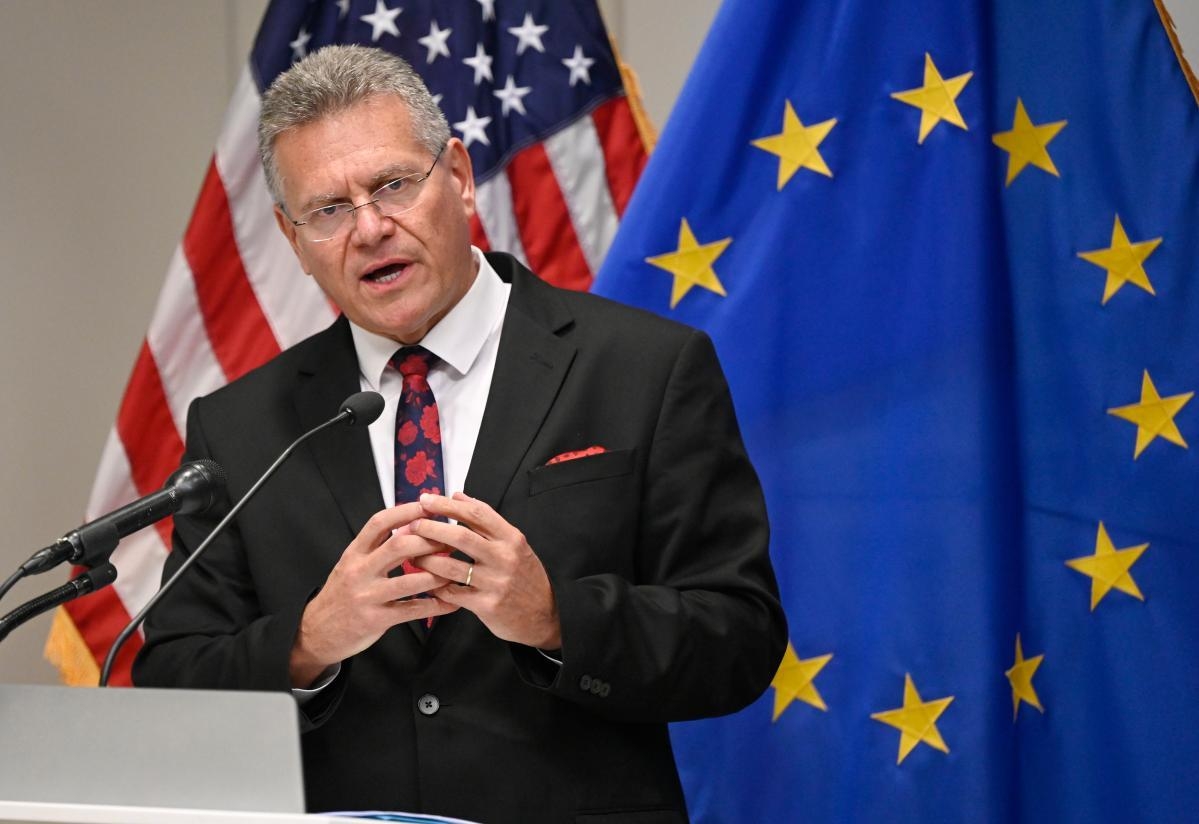
On Monday (30 March), in a letter to European energy ministers, EU Energy Commissioner Dan Jørgensen warned governments to make ‘timely preparations in anticipation of a potentially prolonged disruption’ to energy markets as the war in Iran continues. The message is clear that Brussels is preparing for the possibility that energy instability will persist well beyond any immediate military escalation.
The letter is significant because it signals that the European Union is once again considering the type of intervention last seen during the 2022 energy crisis. At that time, emergency measures included an EU-wide cap on gas prices and a windfall tax on extraordinary profits made by major energy companies. Those policies were introduced as temporary crisis responses; however, the latest warning suggests they may be needed again if the current situation deepens.
For now, Brussels is not forecasting immediate shortages. The commissioner’s main concern is not whether supply stops, but whether prolonged instability in international energy trade leads to increased prices over time. However, the EU does have contingency plans in place. Member states collectively contribute around 20 per cent of emergency oil stocks coordinated through the International Energy Agency (IEA), designed to protect against short-term supply shocks.
Jørgensen also pointed to the IEA’s ten-point plan for reducing fuel demand in a crisis, which includes working from home where possible, reducing national speed limits, encouraging public transport use and increasing car sharing. He further urged governments to lower pressure on households by considering targeted fuel tax reductions while accelerating renewable energy projects already in development.
At the same time, Jørgensen has warned against imposing national measures that could deepen the problem. Member states are being asked to remain cautious in avoiding policies that increase fuel consumption or disrupt cross-border trade. Consultation with neighbouring countries and with the Commission itself is being strongly emphasised in an effort to protect the functioning of the internal market.
In Ireland, the Government’s response has so far been cautious. Tánaiste Simon Harris said this week there are no plans to alter official advice on remote working or travel. Nonetheless, Mr. Harris acknowledged that rising fuel costs are already changing behaviour for many individuals. Responsibility for flexible working arrangements, he said, rests primarily with employers rather than the Government.
Recent developments suggest the pressure is already visible. The Irish Times reported that discounted gas and electricity offers are being withdrawn as suppliers react to wholesale uncertainty. Energy suppliers that just weeks ago competed aggressively for new customers are now retreating, because they cannot supply such rates with confidence. Taoiseach Micheál Martin has also voiced concern describing, the current energy crisis as ‘probably the worst ever, much more severe than even the 1970s supply shock.’
EU Energy Commissioner Dan Jørgensen’s message to members is one of caution and coordination. Although no immediate shortages are expected, member states are being urged to prepare early to avoid responses that could deepen instability. For Brussels, the priority is preserving market stability before geopolitical tension becomes a wider European energy crisis.